In this piece and the next, I hope to connect two dots in a way that is hopefully fresh: Virtue and Technology.
I hope to convince you that as humans we are primarily desiring creatures, not thinking ones, and that our desires are shaped by our repeated actions until they are crystallised into virtue or vice. These repeated actions are our habits and liturgies, and the incentives within our environment can be powerfully formative. In particular, the technological environment we inhabit is full of these heart-shaping liturgies.
As I proceed, I am doing little more than connecting the threads of thought through several key works. There are not many new ideas in the world, and it is perhaps not surprising how new technology only ever meets old human nature. We need only to consider the incentives offered to human nature to understand the challenges.
Virtue and Liturgy
Virtue
I want to begin by discussing personal change and Virtue, and how they’re connected to Habits and Liturgy.
If you were to ask anyone at church what the most important habit of the Christian is, most people would probably say bible reading or prayer. If we pushed further, and asked why, my guess is the answer would be because that’s how we know God and therefore that’s how we be better Christians. Learning more about God results in more fruitful life? Right?
Wrong.
I contend that desires are the core of a person, not knowledge.
The enlightenment and the subsequent information age placed a huge emphasis on knowledge, and we live in a very scientific, rationalistic culture where we are conceptualised as fundamentally thinking beings. My challenge is instead that we are fundamentally loving beings. A moment’s reflection reveals this as obvious. How often do we know we shouldn’t do something and yet we do it anyway? Likewise, we know we should do something but then we don’t do it. It’s not enough to know what’s right and wrong – we must also desire to do it. We are shaped far more by what we want than by what we think, or even by what we think we should want.
Augustine had this concept of love being our weight – that which moves us to our proper place. We are restless until we get to the right place. Like a stone wanting to fall, or a beach ball underwater wanting to rise. He said it was our love that moved us.1
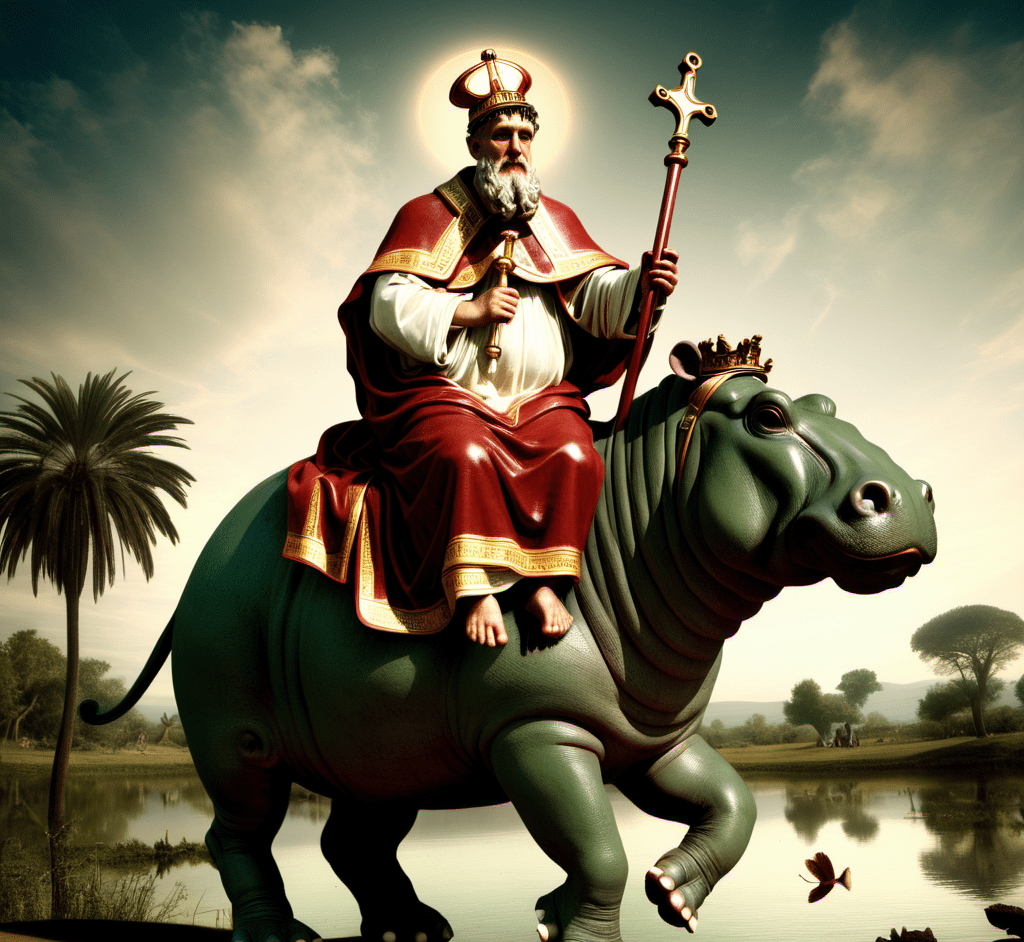
Augustine On Hippo
If this is true, then virtue just became a whole lot harder to achieve. It’s easy enough to think rightly about morality – to shape one’s knowledge and thoughts. But how do we make ourselves want something? How do we shape our own desires? That’s a much harder task.
On this we may consult the ancient wisdom. Aristotle said, “Virtues are formed in man by his doing the actions”. Will Durant comments and expounds on this: “We are what we repeatedly do… therefore excellence is not an act, but a habit.” In other words, you can’t think your way to virtue. Desire is formed in us over time and can be shaped, and this is done principally through habits. Habits are just repeatedly doing things, but the deeper truth about habits is that they actually end up shaping what we want. They shape our character.
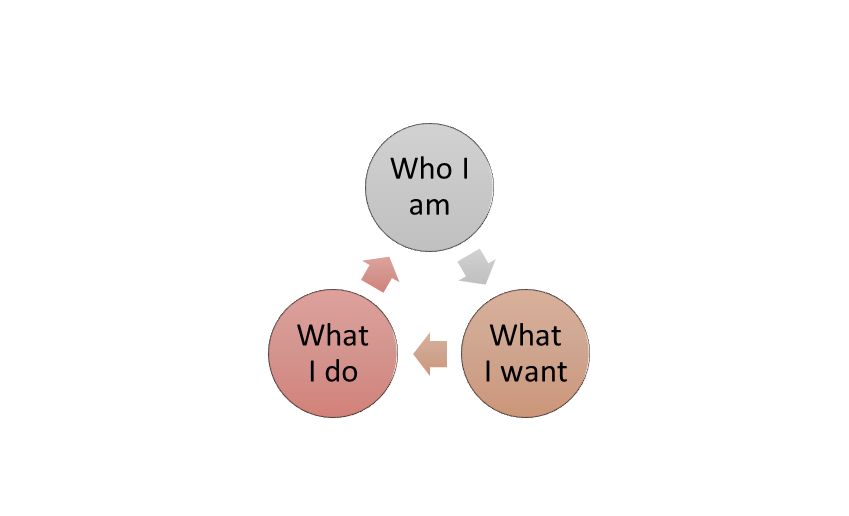
Virtuous Cycle
A superficial example of this is the gym junky who, after eating healthy for years begins to be physically repulsed by the idea of fast food. The process operates on our physical desires as well as our moral sensibilities.
So what is virtue? Virtues are habits with a moral dimension that we practice until they become part of who we are, and shape what we want to do. And it is absolutely our calling as Christians to cultivate Virtue. This is so crucial for the Christian life. Yet we are fundamentally uncomfortable with this as Christians. We get told we are sinful human beings, totally wretched, totally depraved, incapable of earning our salvation or making ourselves good enough for God. We rely solely on the sacrifice of Christ on the cross to redeem us and make us righteous (good people) before God.
Any talk of effort smacks of works theology. The suggestion that we can change ourselves by our own efforts is also fraught. Doesn’t God do all the work to change us?
Yet look at what scripture says:
“Therefore my beloved, as you have always obeyed, so now, not only as in my presence but much more in my absence, work out your own salvation with fear and trembling, for it is God who works in you, both to will and to work for his good pleasure” – Philippians 2:12-13
“His divine power has granted to us all things that pertain to life and godliness, through the knowledge of him who called us to his own glory and excellence, by which he granted to us his precious and very great promises, so that through them you may become partakers of the divine nature, having escaped from the corruption that is in the world because of sinful desire. For this very reason, make every effort to supplement your faith with virtue, and with virtue knowledge, and knowledge with self-control, and self-control with steadfastness, and steadfastness with godliness, and godliness with brotherly affection, and brotherly affection with love. For if these qualities are yours and are increasing, they keep you from being ineffective or unfruitful in the knowledge of our Lord Jesus Christ. For whoever lacks these qualities is so nearsighted that he is blind, having forgotten that he was cleansed from his former sins. Therefore, brothers, be all the more diligent to confirm your calling and election, for if you practice these qualities you will never fall. For in this way there will be richly provided for you an entrance into the eternal kingdom of our Lord and Saviour Jesus Christ.” – 2 Peter 1:3-11
The Catholics also care about virtue, but their perspective can be tilted towards works. Martin Luther was famously critical of the book of James’ inclusion in the canon for this reason. A potential catholic perspective would be that the Christian life is to become virtuous for heaven, and that we are aided and made able to succeed by Christ and his work and his spirit, but there remains work for us to do.
Now, we know that is putting the cart before the horse, but the opposite mistake is to unhitch the cart and gallop off on just the horse. I want to suggest that we lose focus on virtue at our peril. Put in bald terms: our salvation requires work. In the sense that we are saved; therefore we work.
This may make some feel uncomfortable or burdened, but I would say it’s empowering. Doesn’t it get you revved up to get told “here’s the bar”? To get a clear upward call to be the person you should be. That’s purpose. That’s meaning. That’s identity. All the things our culture craves, we have. And all from a baseline security of our salvation. Man, the gospel is good.
Aristurtle
Liturgy
OK. Back to virtue and habits. If we are called to cultivate virtue in our lives and this happens through our habits, then we’ve got to start thinking about the habits in our lives.
We’re all formed by something. When we grew up, we were taught by our parents which things to do and not do. It started simple: don’t touch hot stuff. Then it was: don’t eat the sweet stuff before dinner. Then maybe we were taught to delay gratification. To control our anger. To work hard before playing. These things shaped us to be who we are, such that we find it easier or more difficult to do those things now. Some of us find it easier to get out of bed early and go for a run. Or say no to the snack. Or clean our room. Or read a book. Those are small examples of virtues and they are formed from very early on in our childhood, and some of us have a head start.
But the good news is that we can all work on habits and form in ourselves new and better virtues. And it all depends on our dedication to that formation. Now the same goes for the opposite – we can be deformed or malformed by our current habits and environment.
We don’t live in a vacuum. We are swimming in water that forms us. We are being called to worship stuff every day, and it changes us. Our families, sharehouses, church community, friendship groups, workplaces, social media feeds, books we read – these all form in us certain virtues, and have risk of certain vices.
James K.A. Smith has a brilliant book on this subject called ‘You are what you love’2, from which I’ve taken all the below insights on liturgy. He uses the example of a shopping centre, as a symbol (or temple) of a consumerist culture. When we walk into a shopping centre, especially a glitzy one like Westfield, we are walking into a church. We are being invited by our culture to participate in the liturgies of consumerism – being invited to worship what’s on offer. You are welcomed in by the warm air and clean floors, placed in a position of awe and reverence for the opulence, the gold and silver and lights, and you are presented with objects of desire. The ads on TV reinforce this, as they present us with products and people to be admired and desired. They are telling us: you want this. You should want this.
This is a kind of worship, and it forms in you certain kinds of virtues (habitual desires) that then affect how you live.
When we break it down, these are the values operating at the core of the culture:
- Fashionability – the desire to be like everyone else and conform. Not only that but to be up-to-date. To not fall behind.
- Individuality – where you can be yourself, or better yet, express yourself (but not too much)
- Adventure – where you can be equipped for cool places and discover new things
- Supremacy – To be better than others. To have more than them. To have what they can’t have
- Beauty – to heal your brokenness and ugliness that you feel inside. To make yourself desirable by what you wear and how you look.
These things are visions of fulfilment – they offer a picture of what it means to be human. And they are telling us what is normal for us to do and to want. This happens on a sub-conscious level. Gradually, we come think that “it’s normal to… [insert thing here]”.
Liturgy is an old word to describe the order of the church service. But the concept is much richer than this.
Liturgy: Any ritual/habit which we repeatedly do that forms us to love a certain thing. They are always loaded with an ultimate story about who we are and what we’re for.
And liturgies are everywhere. The things we do every day tell us what we worship, but more than that, they shape what we love. So reading the bible is a liturgy. But so is scrolling social media. And so is playing sport. And playing video games. Having friends over for dinner. Going to church. Working out at the gym. These are all habits in our lives and we need to think carefully about how each of them helps or hinders our path toward virtue.
In this sense, our idolatries are more liturgical than theological. They are to do with our virtues. We are what we worship. We don’t really have a problem with acknowledging God as the boss – at the top of our hierarchy. We have a problem with ordering our lives such that it is visible that God is the chief desire of our hearts.
“It is my prayer that your love may abound more and more, with knowledge and all discernment, so that you may approve what is excellent, and so be pure and blameless for the day of Christ, filled with the fruit of righteousness that comes through Jesus Christ, to the glory and praise of God” – Philippians 1:9-11
“Put on then, as God’s chosen ones, holy and beloved, compassionate hearts, kindness, humility, meekness, and patience, bearing with one another and, if one has a complaint against another, forgiving each other; as the Lord has forgiven you, so you also must forgive. And above all these put on love, which binds everything together in perfect harmony.” – Colossians 3:12-14
In the next post, I will attempt to argue that the technological world we inhabit has an incredible heart-shaping and mind-shaping power, and that it requires careful thought to navigate.
References
1 – Augustine, Confessions, Book 13 Chapter 9
2 – You Are What You Love – James K. A. Smith
 Outbound
Great stuff mate! That AI art is crackerjack. You should make merch.
Your piece was an encouraging reminder of how we should take hold of that for which Christ Jesus has taken hold of us (Phil 3:12-14) and that we should resist how the world catechises and shapes us by cultivating heavenly virtue. I really liked your discussion of the James AK Smith stuff (Watkin loves him and refers to that book heaps in BCT) and your explanation of our culture’s taproot values. Something you could’ve discussed is virtue ethics’ commendation of imitating virtuous role models; the Bible says we are to imitate Christ (and Paul/whoever as they imitate him (1 Cor 11:1-2). It is amazing that God uses our own agency to change us, knowing that he who began a good work in us will bring it to completion (Phil 1:6).
Very keen to read the next one!
LikeLike